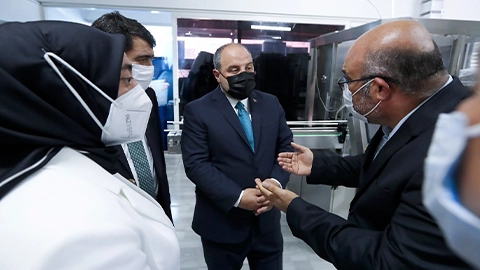
Speaking to an AA (Anadolu Agency) reporter about his visit, Varank noted that the company had launched a significant R&D and manufacturing project with OSTİM Technical University, adding: “They developed and commercialized Turkey’s first contact lens solution here.”
Stating that contact lens solutions had previously been imported and that there was a deficit of approximately 120 million dollars in this area, Varank said the company had obtained the necessary permits and certifications for the lens solutions it manufactures.
Varank underlined that contact lens users in Turkey now have access to a domestic, nationally developed product, and continued: “We are a government striving for development through production in Turkey. We attach particular importance to developing, with domestic and national means, value-added products, especially those in which we run a deficit. With the various supports and incentives of our state, particularly from KOSGEB, this company produced this product within the framework of university–industry collaboration.”
“We will issue a call focused on health and chemical products”
Referring to the Technology-Oriented Industry Move Program they launched, Varank said:
“From R&D to commercialization, we support as the state all stages of products in which we run a deficit; we provide support to our companies in the product groups we have identified. The chemicals and pharmaceuticals industries are among these. In the coming period, within the scope of the move program, we will issue a call and support projects in which our companies will produce products and medicines that are not currently manufactured in Turkey.”
Expressing satisfaction that Jeomed is producing lens solutions, an area with a deficit in Turkey, thanks to support from KOSGEB, Varank stated that they would continue to support localization initiatives across all sectors.
“We aim to export 6 million boxes in one year”
The company’s Chairman of the Board, Polat, said that in Jeomed’s early years they imported healthcare products, and later, when they could not achieve the desired quality with products contract-manufactured by pharmaceutical companies, they established their own production facilities.
Polat continued: “We wanted our products to be effective against bacteria, viruses, fungi, and parasites, and also to contain our country’s natural wealth—thermal waters. When we couldn’t achieve this with any manufacturer, we built our own ‘kitchen.’”
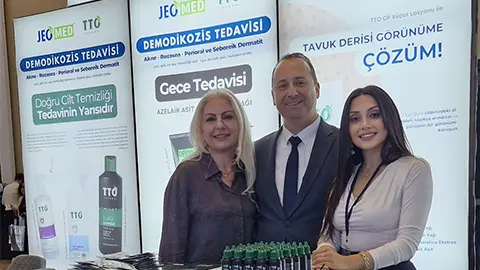
Pointing to Turkey’s richness in geothermal resources, Polat said: “We have always used geothermal water in our products. When our health products—rich in sulfur, vitamins, and minerals—were reinforced with tea tree oil as the active ingredient, we achieved distinctive shampoos, soaps, creams, and lotions.”
Polat noted that shampoos generally contain harmful active substances, whereas their products do not, and therefore can be used with confidence.
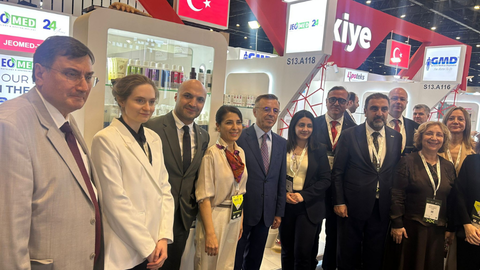
Explaining that they began selling their products, 14 of which are patented, to the world by participating in overseas congresses and international fairs, Polat said: “Users give positive feedback. As a result, we have built an export volume reaching 51 countries, including Greece, the United States, Russia, India, and Ecuador. With the contact lens solution we produce, we will further increase our exports. We aim to export 6 million boxes of lens solution within one year.”
Drawing attention to Turkey’s significant deficit in health products, Polat said: “Let’s trust our domestic products and support our domestic companies. As domestic firms succeed, we will invest, open new factories, buy new machinery. By employing many unemployed people, we will contribute to our country’s development. If we produce high value-added products, we can succeed.”
Source: Anadolu Agency (AA)